
Useful work on the journey back.
Reverse logistics. Make the return count.
Your store delivery vehicle can bring more than empty space back to the warehouse. Synergix builds returned stock, reusable delivery containers and agreed waste or packaging collections into the retail loop. Plan the outward and return legs together to reduce separate collection trips, keep stores clearer and make better use of the movement you already need.
Productive backhaulReturning vehicles collect declared goods and materials.
Reusable containersBring delivery packaging back for another cycle.
Recorded recyclingClear garment plastic and cardboard through an agreed partner route.
Connected stock movementReturns, consolidation and redistribution in one plan.
The retail return loop
Join the delivery and collection requirements.
Reverse logistics is the process behind goods and materials coming back. Backhaul is the useful return load on the vehicle.
Returned merchandise
Bring the stock to its next destination
Collect unsold goods, customer returns held at stores or other declared stock. Keep the store, reference, quantity and condition clear. The next destination may be the retailer's warehouse, a supplier or an agreed consolidation point.
Reusable delivery packaging
Keep your containers circulating
Reusable bag-boxes and other agreed containers can return for the next dispatch. In our established retail operation, reusable containers have remained in use for around a year, extending their service beyond the initially expected handful of cycles.
Packaging and waste collections
Add the right streams to the programme
Collected clear garment plastic and cardboard in our established retail operation are recycled through a partner, with records retained. General waste is handled separately. We agree the streams, separation, destinations and responsibilities for each customer.
Backhaul capacity
Allow for what the vehicle brings home
Return loads need space, payload and suitable separation after every store visit. Declare normal and peak quantities, packing and condition so the return leg is designed into the operation, not added after the vehicle is full.
Goods and practical requirements
Goods and materials in the return loop.
Keep reusable stock, returnable equipment and waste streams distinct so each can follow the right route.
- Saleable and unsold stock
- Customer returns and reported faults
- Reusable bag-boxes and totes
- Cages, pallets and store equipment
- Cardboard and clear garment plastic
- Other declared waste
Saleable and unsold stock
Identify the store, product or carton references, quantities and the retailer's next instruction. Keep merchandise suitably packed and separate from waste. The retailer or agreed assessor decides its resale status.
Customer returns and reported faults
Use the retailer's return reference and declare known damage, missing components or other condition issues. Acceptance and handling are confirmed for the goods. Refunds, product diagnosis and repair are separately controlled tasks.
Reusable bag-boxes and totes
Provide the number, size and return destination of empty or folded containers. Returning them within the distribution cycle helps keep the retailer supplied for the next outbound load.
Cages, pallets and store equipment
Declare ownership, dimensions, weight and collection quantities. Confirm how equipment is moved and secured, including folded or nested arrangements where appropriate. Collection capacity still needs checking even when items are empty.
Cardboard and clear garment plastic
Keep the agreed materials separated and prepared for collection. In the established programme they pass to a recycling partner with records. That does not make every plastic, contaminated material or mixed waste stream interchangeable.
Other declared waste
Identify the actual material, condition and destination before agreeing collection. General waste is separate from recyclable packaging. Hazardous, leaking, electrical or other specialist material needs its own assessment and arrangement.
The vehicle follows the job
Explore the wider Synergix fleet.
This fleet overview covers different transport and handling requirements. We match the vehicle, body and equipment to your goods, access and the work booked. A pictured configuration is not automatically suitable for every retail job.
39 vehicle options. Browse horizontally or open the stationary guide.
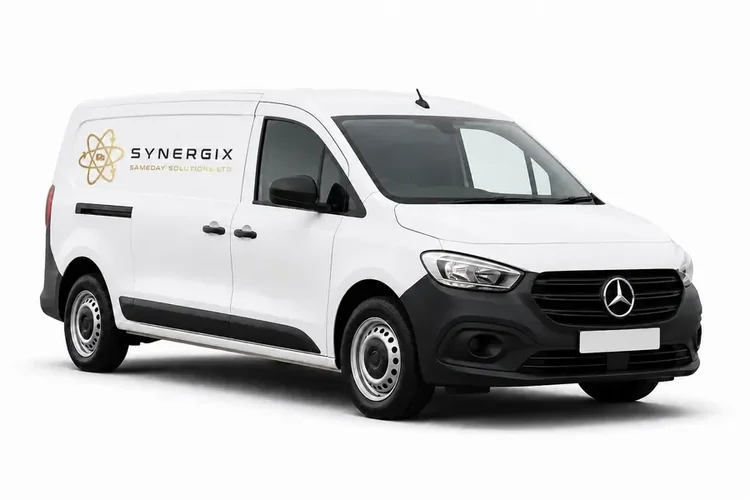
Small van
1.2 × 1 × 1 m
Up to 400 kg
A practical starting point for urgent parts, documents, samples and compact business deliveries.
Standard body guide; actual vehicle checked.
View vehicle guide: Small van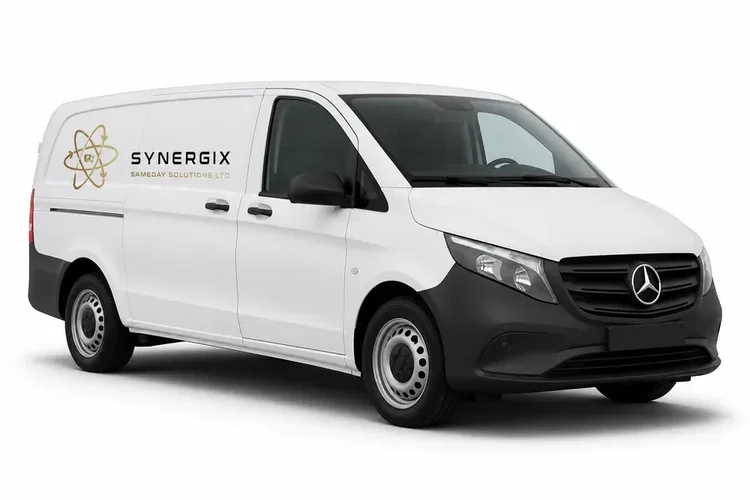
SWB van
2.4 × 1.2 × 1.2 m
Up to 800 kg
Useful for stock, tools and smaller pallet loads that need more room than a small van.
Standard body guide; actual vehicle checked.
View vehicle guide: Short wheelbase van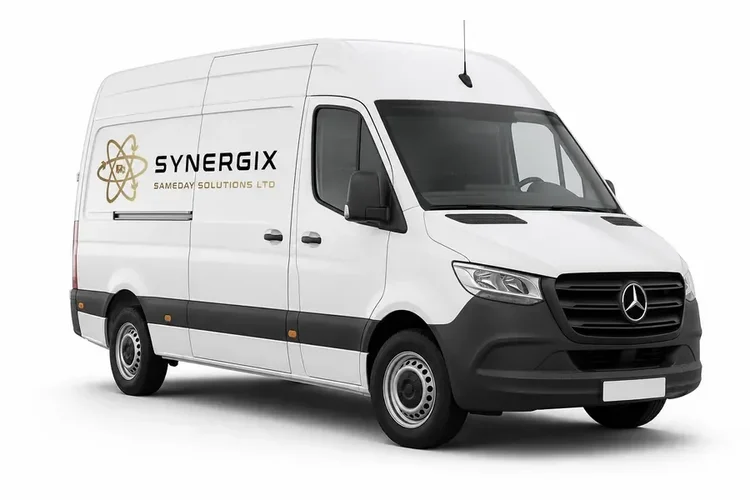
LWB van
3.6 × 1.2 × 1.8 m
Up to 1,250 kg
More floor length for equipment, boxed stock, signage and longer items on dedicated courier work.
Standard body guide; actual vehicle checked.
View vehicle guide: Long wheelbase van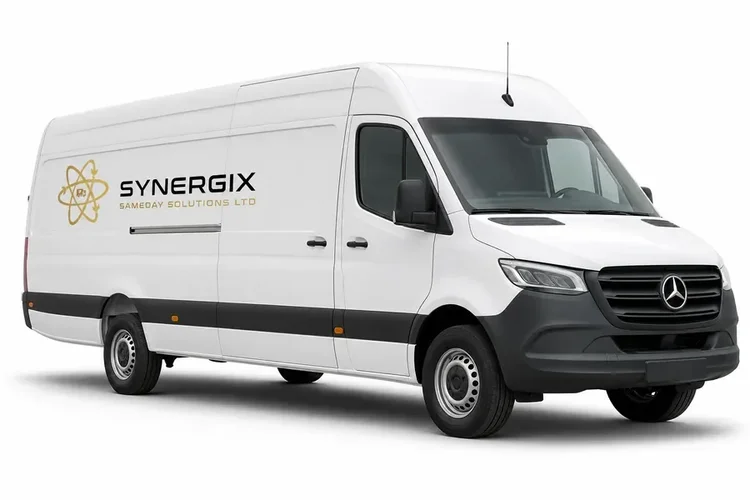
XLWB van
4.2 × 1.2 × 1.8 m
Up to 1,100 kg
Extra length for bulky, lighter consignments and long items that need an enclosed vehicle.
Standard body guide; actual vehicle checked.
View vehicle guide: Extra long wheelbase van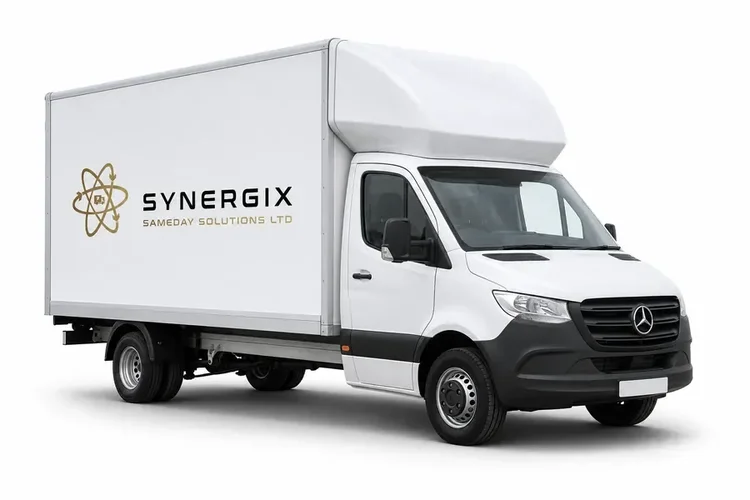
Luton van
4 × 2 × 2 m
Up to 1,100 kg
A wider box-shaped load area for bulky stock, furniture and light palletised deliveries.
900 kg with a tail lift; conversion checked.
View vehicle guide: Luton van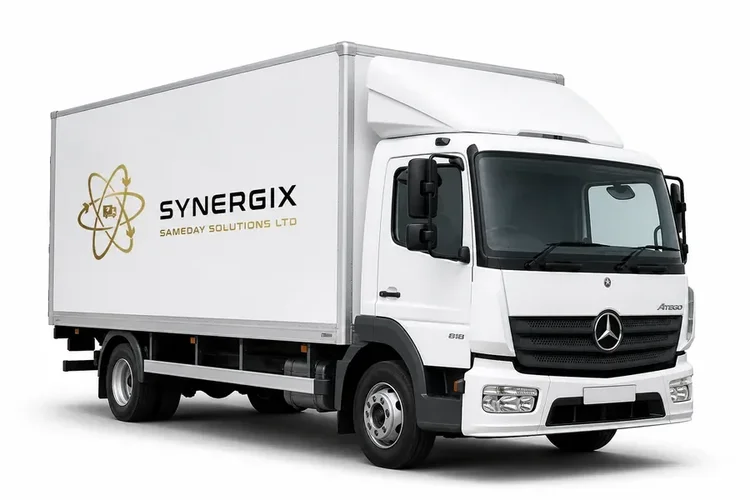
7.5 tonne lorry
6 × 2.2–2.4 × 2–2.445 m
Up to 2,400 kg
A step up from vans for pallet deliveries, retail stock and bulky goods requiring a rigid lorry.
Standard body guide; actual vehicle checked.
View vehicle guide: 7.5 tonne lorry
18 tonne lorry
7.5 × 2.4 × 2.5 m
Up to 9,000 kg
A larger rigid for regular distribution, industrial goods and heavier pallet loads.
Standard body guide; actual vehicle checked.
View vehicle guide: 18 tonne lorry
26 tonne lorry
8 × 2.5 × 2.6 m
Up to 15,000 kg
A higher-capacity rigid option for substantial pallet, building-material and distribution loads.
Standard body guide; actual vehicle checked.
View vehicle guide: 26 tonne lorry
13.6m artic
13.6 × 2.5 × 2.6 m
Up to 26,000 kg
Full and part loads, regular trunking and larger consignments. Choose the trailer around the goods and unloading method.
Standard body guide; actual vehicle checked.
View vehicle guide: 13.6m articulated lorry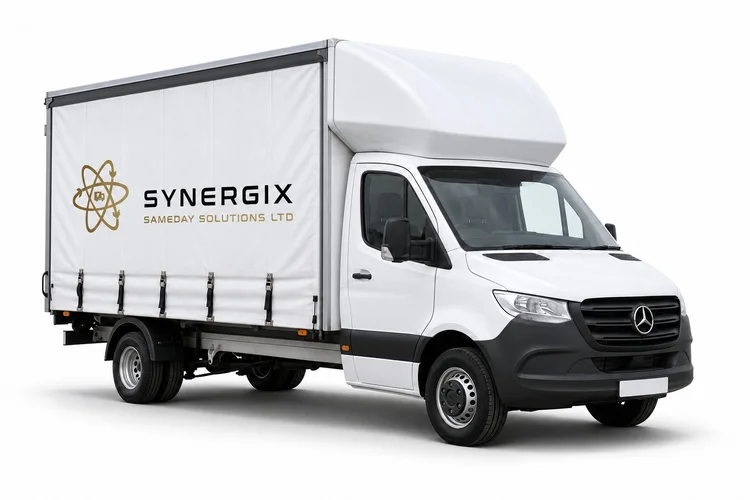
Luton curtainsider
Actual body specification confirmed
Load-specific capacity
Side loading needs a suitable opening, securing system and safe forklift access. Confirm the actual body space and payload.
Actual body, equipment and working payload checked.
View vehicle guide: Luton curtainsider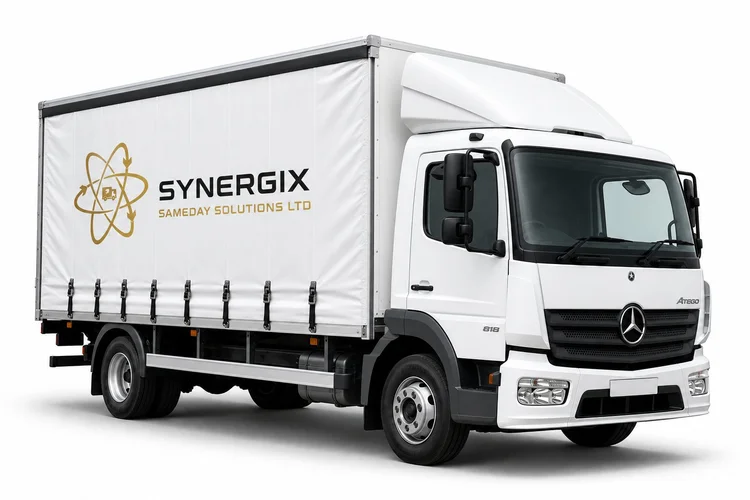
7.5t curtainsider
Actual body specification confirmed
Load-specific capacity
Side loading needs a suitable opening, securing system and safe forklift access. Confirm the actual body space and payload.
Actual body, equipment and working payload checked.
View vehicle guide: 7.5t curtainsider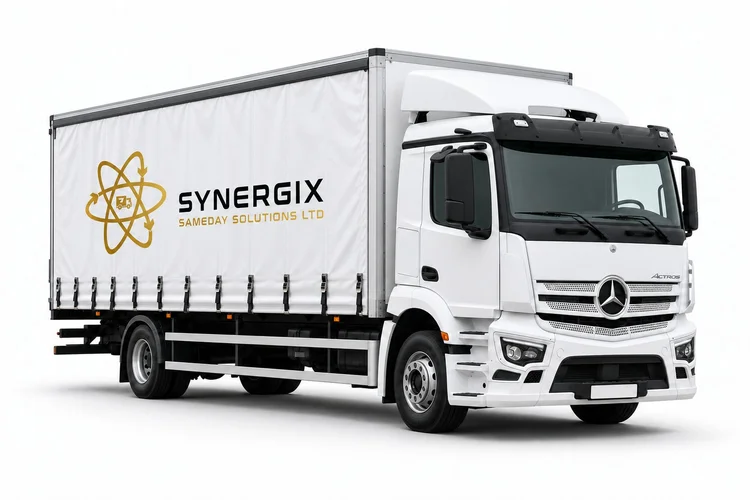
18t curtainsider
Actual body specification confirmed
Load-specific capacity
Side loading needs a suitable opening, securing system and safe forklift access. Confirm the actual body space and payload.
Actual body, equipment and working payload checked.
View vehicle guide: 18t curtainsider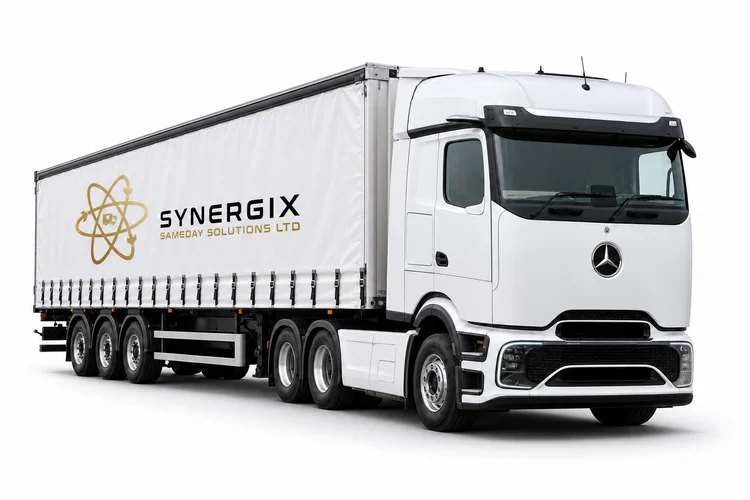
Articulated curtainsider
Actual body specification confirmed
Load-specific capacity
Side loading needs a suitable opening, securing system and safe forklift access. Confirm the actual body space and payload.
Actual body, equipment and working payload checked.
View vehicle guide: Articulated curtainsider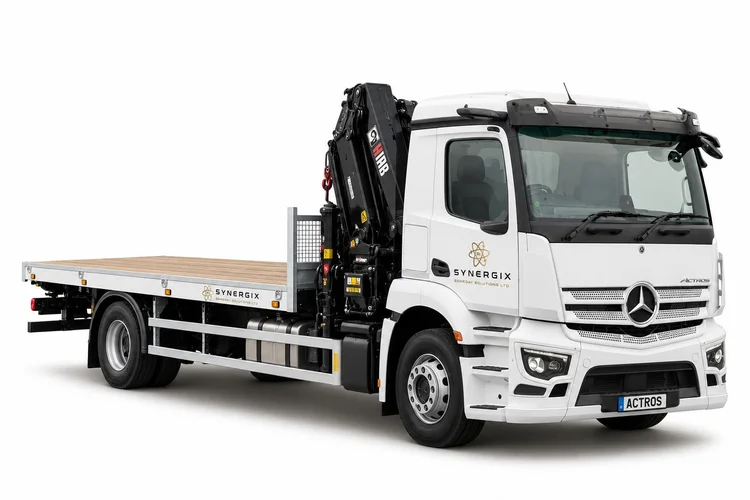
18t flatbed HIAB
Actual body specification confirmed
Load-specific capacity
Check load weight, lifting points, reach, ground, stabiliser space and the actual lift plan. Standard-body payload does not apply.
Actual body, equipment and working payload checked.
View vehicle guide: 18t flatbed HIAB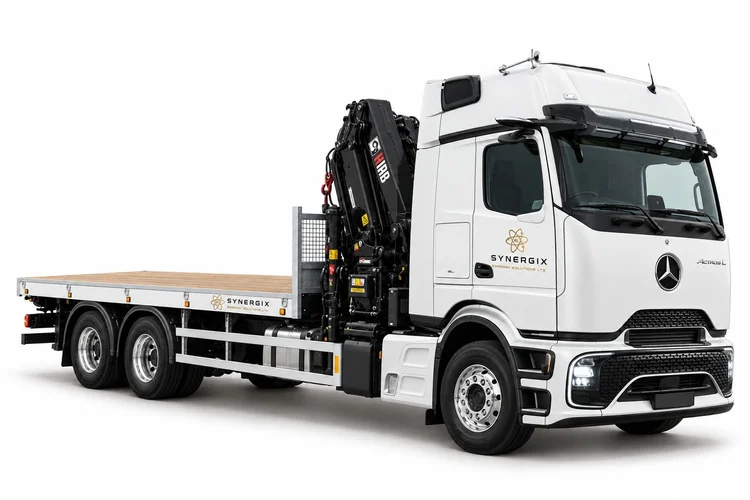
26t flatbed HIAB
Actual body specification confirmed
Load-specific capacity
Check load weight, lifting points, reach, ground, stabiliser space and the actual lift plan. Standard-body payload does not apply.
Actual body, equipment and working payload checked.
View vehicle guide: 26t flatbed HIAB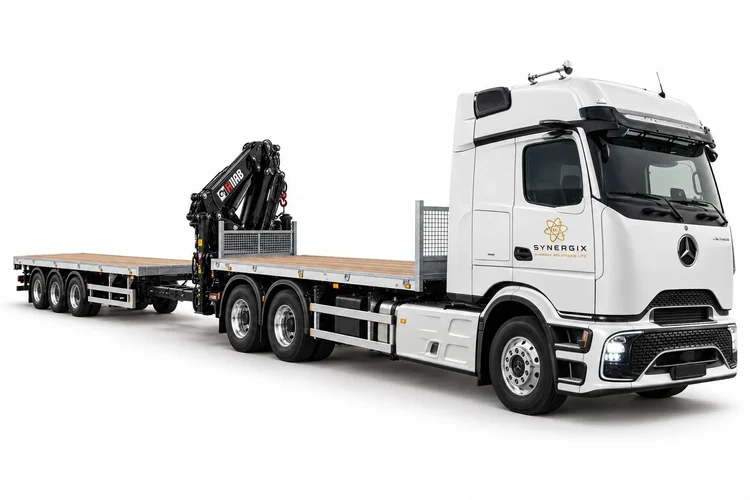
Wagon & drag, rear HIAB
Actual body specification confirmed
Load-specific capacity
Check load weight, lifting points, reach, ground, stabiliser space and the actual lift plan. Standard-body payload does not apply.
Actual body, equipment and working payload checked.
View vehicle guide: Wagon & drag, rear HIAB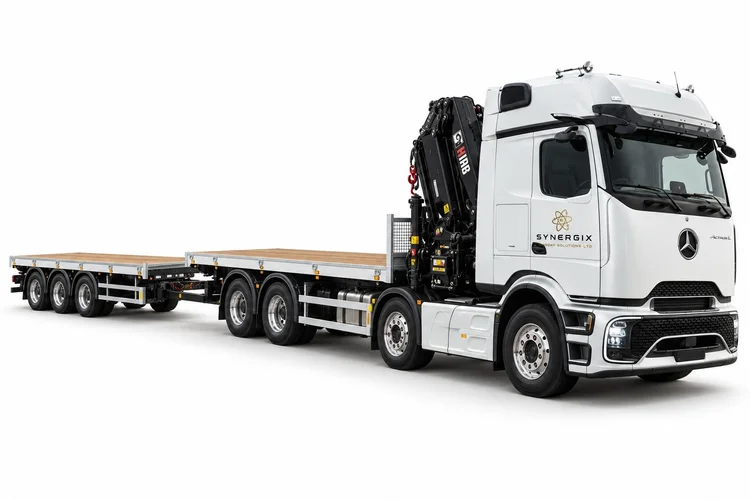
Wagon & drag, front HIAB
Actual body specification confirmed
Load-specific capacity
Check load weight, lifting points, reach, ground, stabiliser space and the actual lift plan. Standard-body payload does not apply.
Actual body, equipment and working payload checked.
View vehicle guide: Wagon & drag, front HIAB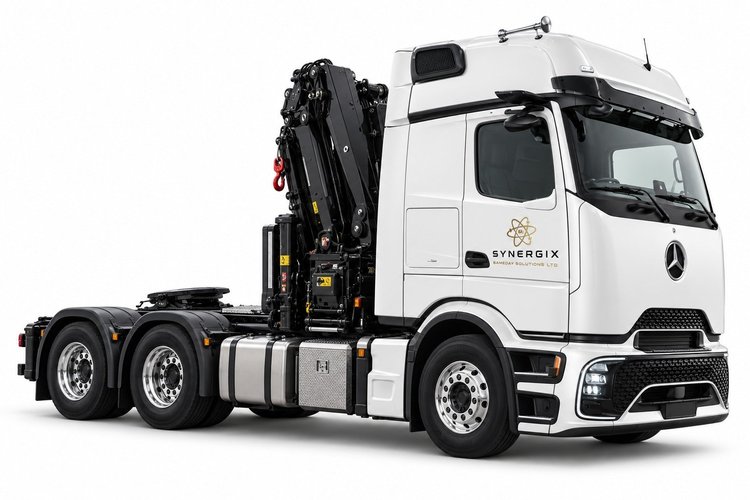
Three-axle HIAB tractor
Actual body specification confirmed
Load-specific capacity
Check load weight, lifting points, reach, ground, stabiliser space and the actual lift plan. Standard-body payload does not apply. Tractor shown without a trailer. Agree the complete combination.
Actual body, equipment and working payload checked.
View vehicle guide: Three-axle HIAB tractor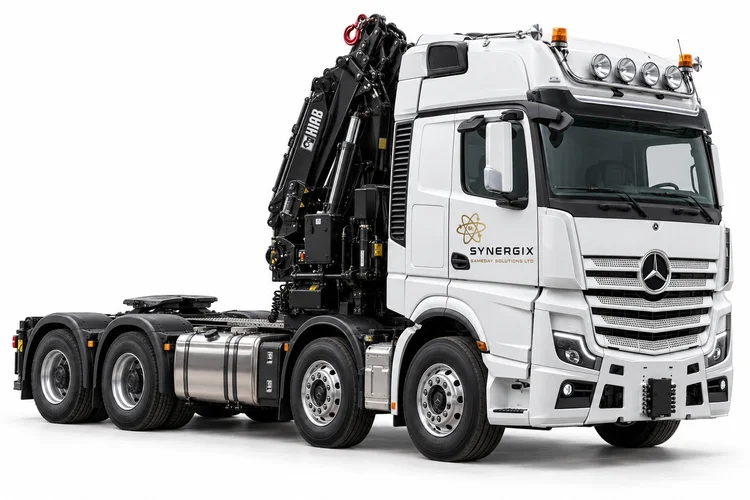
Four-axle heavy HIAB tractor
Actual body specification confirmed
Load-specific capacity
Check load weight, lifting points, reach, ground, stabiliser space and the actual lift plan. Standard-body payload does not apply. Tractor shown without a trailer. Agree the complete combination.
Actual body, equipment and working payload checked.
View vehicle guide: Four-axle heavy HIAB tractor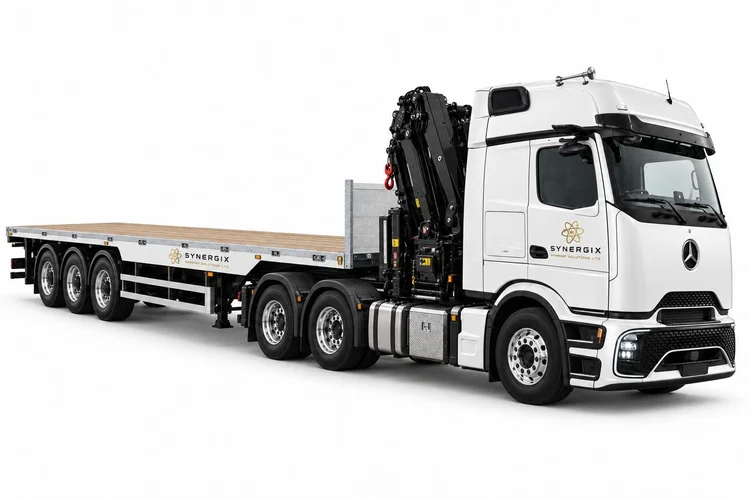
HIAB artic & flatbed
Actual body specification confirmed
Load-specific capacity
Check load weight, lifting points, reach, ground, stabiliser space and the actual lift plan. Standard-body payload does not apply.
Actual body, equipment and working payload checked.
View vehicle guide: HIAB artic & flatbed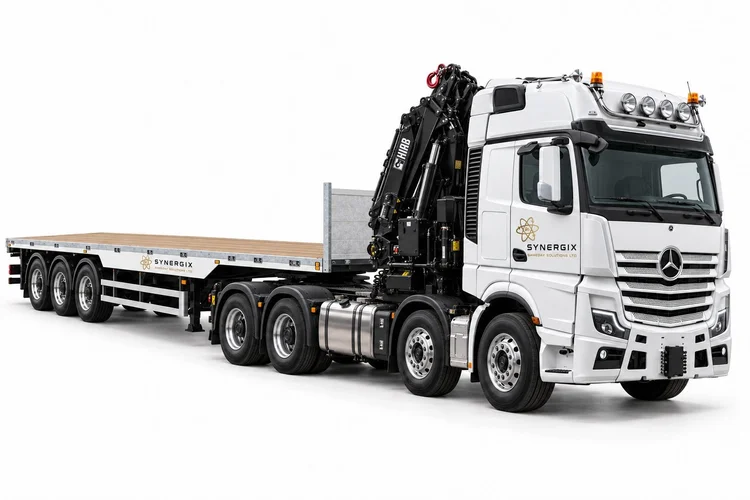
Heavy HIAB artic & flatbed
Actual body specification confirmed
Load-specific capacity
Check load weight, lifting points, reach, ground, stabiliser space and the actual lift plan. Standard-body payload does not apply.
Actual body, equipment and working payload checked.
View vehicle guide: Heavy HIAB artic & flatbed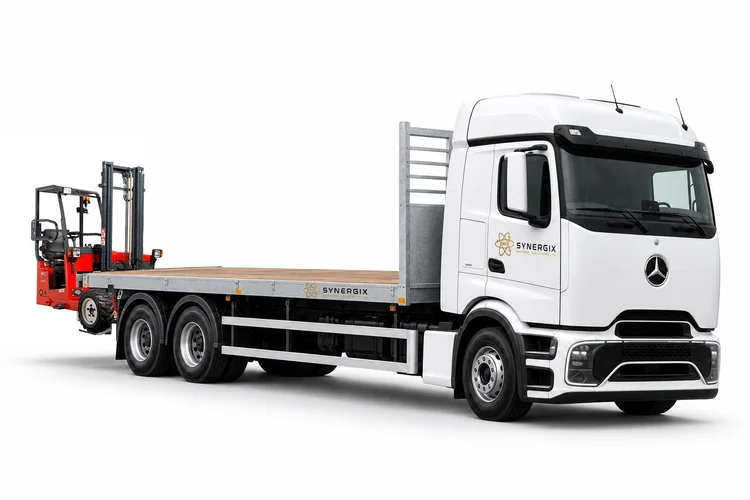
26t flatbed MOFFETT
Actual body specification confirmed
Load-specific capacity
Carried forklift unloading. Check load centre, item weight, fork access, ground, gradients and working space. Fitted equipment reduces payload.
Actual body, equipment and working payload checked.
View vehicle guide: 26t flatbed MOFFETT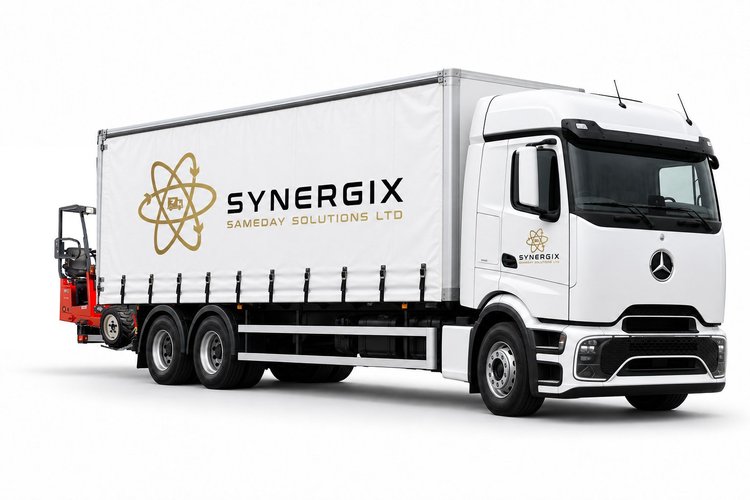
26t curtainsider MOFFETT
Actual body specification confirmed
Load-specific capacity
Carried forklift unloading. Check load centre, item weight, fork access, ground, gradients and working space. Fitted equipment reduces payload.
Actual body, equipment and working payload checked.
View vehicle guide: 26t curtainsider MOFFETT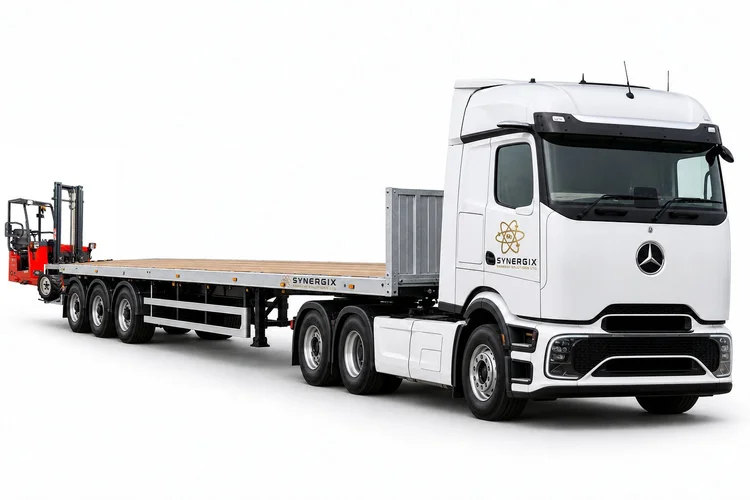
Artic flatbed MOFFETT
Actual body specification confirmed
Load-specific capacity
Carried forklift unloading. Check load centre, item weight, fork access, ground, gradients and working space. Fitted equipment reduces payload.
Actual body, equipment and working payload checked.
View vehicle guide: Artic flatbed MOFFETT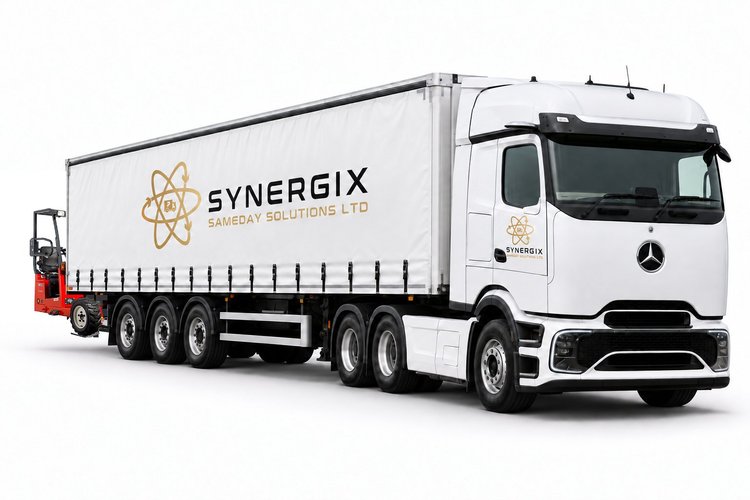
Artic curtainsider MOFFETT
Actual body specification confirmed
Load-specific capacity
Carried forklift unloading. Check load centre, item weight, fork access, ground, gradients and working space. Fitted equipment reduces payload.
Actual body, equipment and working payload checked.
View vehicle guide: Artic curtainsider MOFFETT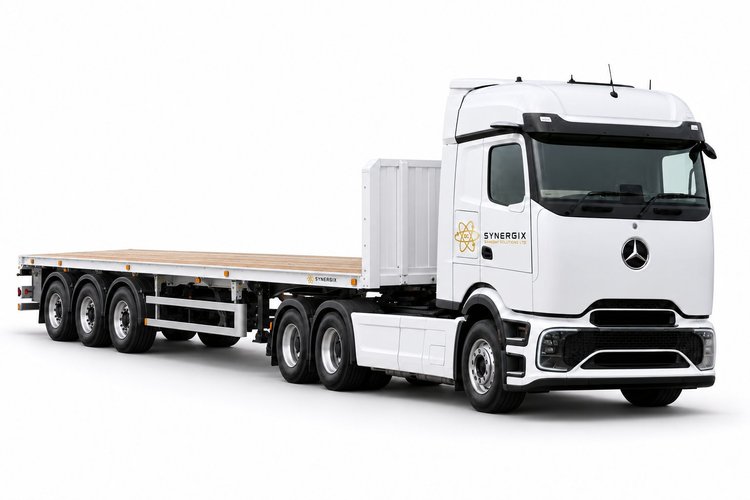
Articulated flatbed
Actual body specification confirmed
Load-specific capacity
Open-deck goods need appropriate weather protection, restraint and loading equipment.
Actual body, equipment and working payload checked.
View vehicle guide: Articulated flatbed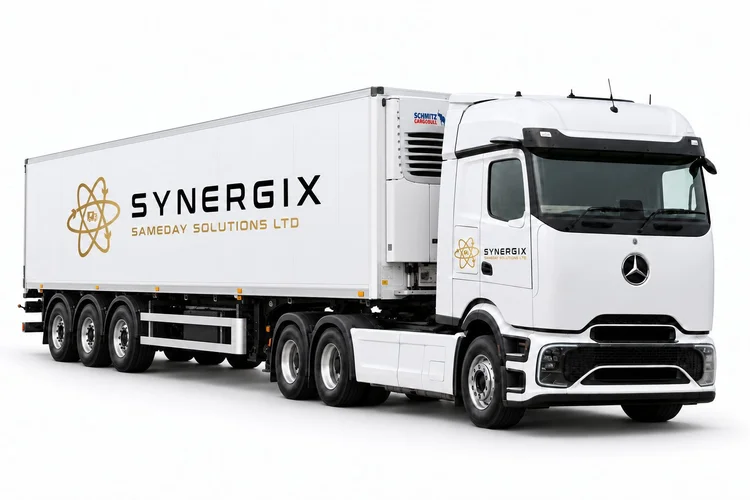
Refrigerated trailer
Actual refrigerated space confirmed
Refrigerated trailer option
Confirm goods, temperature, usable space, payload, power and operating responsibilities. Transport and static hire are separate bookings.
Actual body, equipment and working payload checked.
View vehicle guide: Refrigerated trailer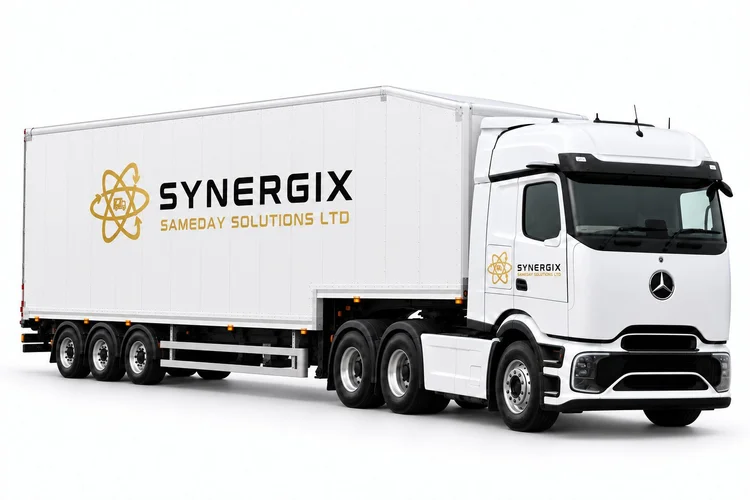
Double-deck box trailer
Actual body specification confirmed
Load-specific capacity
Check both deck heights, individual deck limits, access and the actual loading sequence.
Actual body, equipment and working payload checked.
View vehicle guide: Double-deck box trailer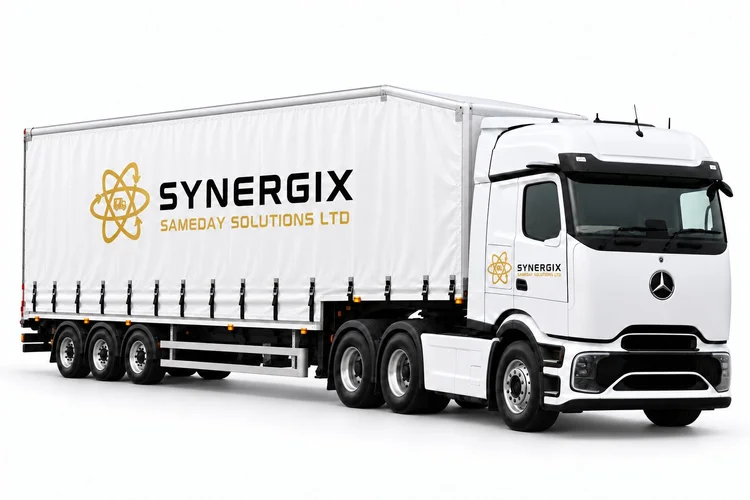
Double-deck curtainsider
Actual body specification confirmed
Load-specific capacity
Confirm deck heights, weight distribution, side access and the securing plan.
Actual body, equipment and working payload checked.
View vehicle guide: Double-deck curtainsider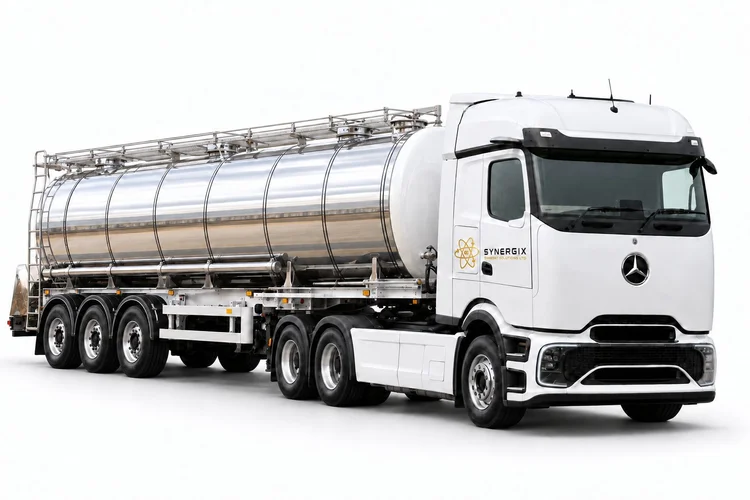
Tanker trailer
Actual body specification confirmed
Load-specific capacity
Declare the product, compatibility, hygiene, transfer equipment and any regulatory requirements. Acceptance is checked, not automatic.
Actual body, equipment and working payload checked.
View vehicle guide: Tanker trailer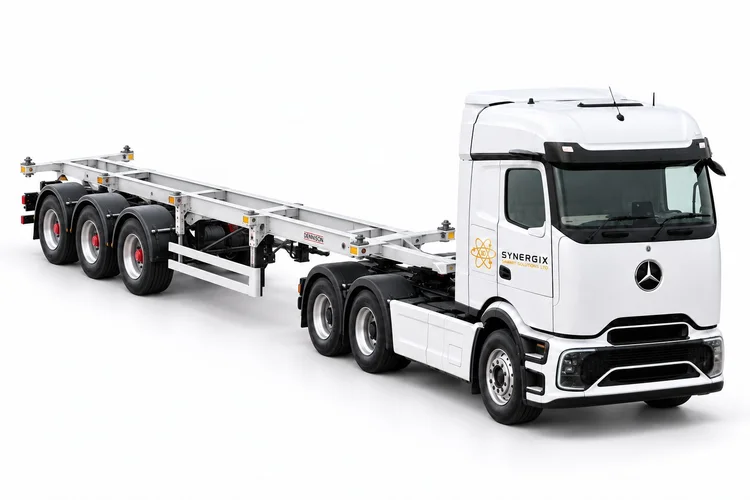
Skeletal container trailer
Actual body specification confirmed
Load-specific capacity
Confirm container size, loaded weight, twistlock positions and terminal or site lifting arrangements.
Actual body, equipment and working payload checked.
View vehicle guide: Skeletal container trailer
Walking-floor trailer
Actual body specification confirmed
Load-specific capacity
Check material suitability, unloading clearance, ground and the actual moving-floor arrangement.
Actual body, equipment and working payload checked.
View vehicle guide: Walking-floor trailer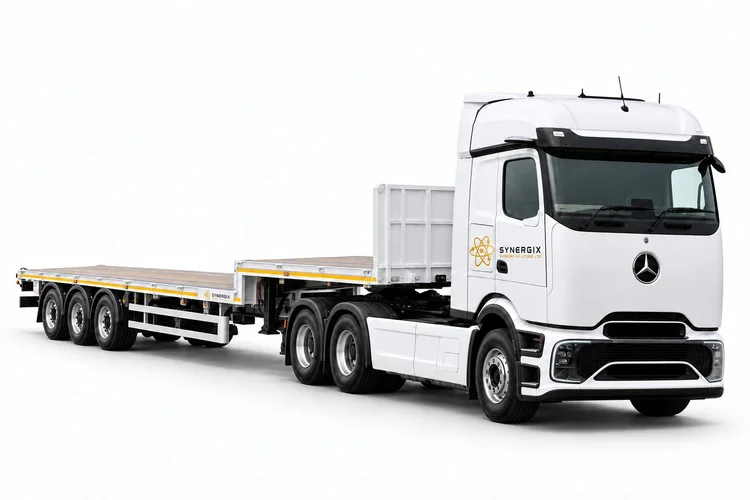
Step-frame trailer
Actual body specification confirmed
Load-specific capacity
Check each deck length and height, point loads, overall loaded height and loading method.
Actual body, equipment and working payload checked.
View vehicle guide: Step-frame trailer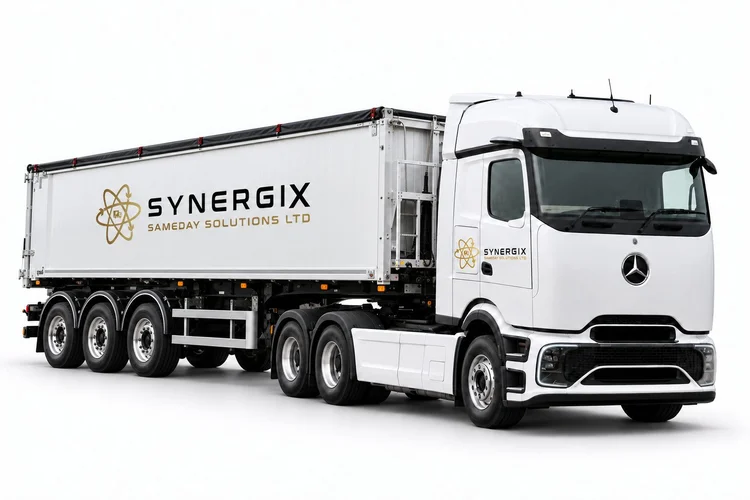
Bulk tipper trailer
Actual body specification confirmed
Load-specific capacity
Declare the material and contamination requirements. Check tipping space, overhead clearance and stable level ground.
Actual body, equipment and working payload checked.
View vehicle guide: Bulk tipper trailer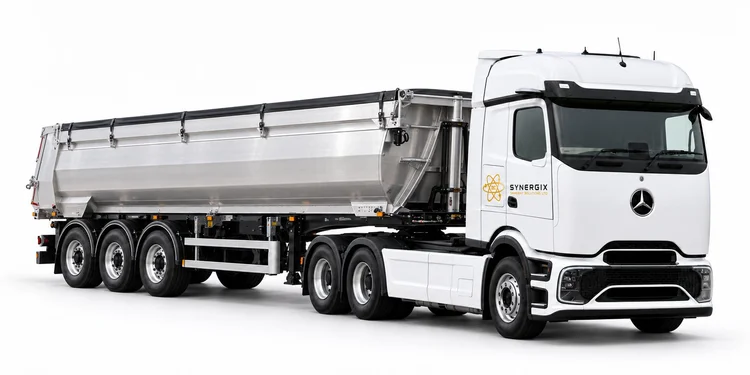
Alloy U-shaped tipper
Actual body specification confirmed
Load-specific capacity
Confirm material, liner or body compatibility, capacity and safe tipping conditions.
Actual body, equipment and working payload checked.
View vehicle guide: Alloy U-shaped tipper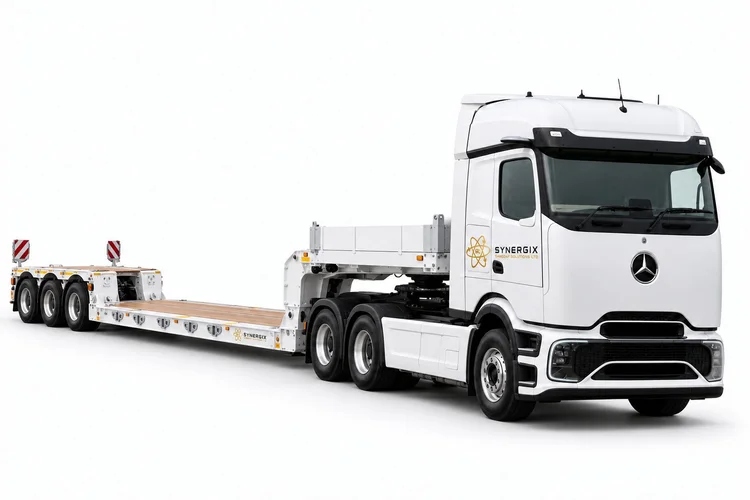
Low-loader
Actual body specification confirmed
Load-specific capacity
Check deck profile, ramps, concentrated weight, ground clearance and actual loaded dimensions.
Actual body, equipment and working payload checked.
View vehicle guide: Low-loader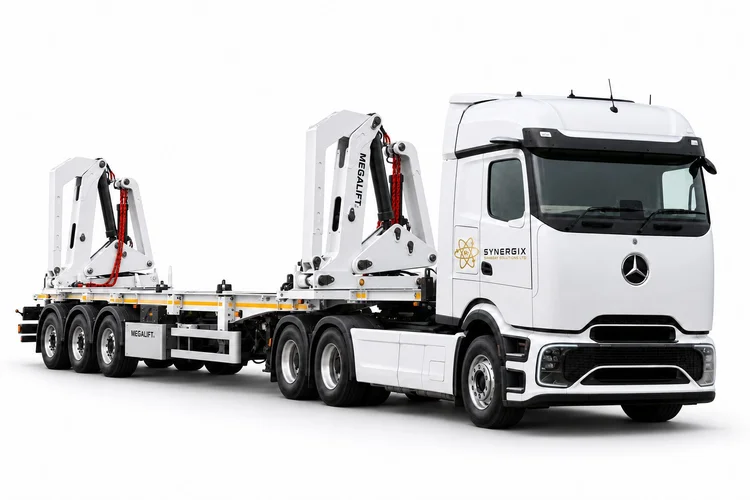
Megalift trailer
Actual body specification confirmed
Load-specific capacity
Container side-lifting needs the actual load, outreach, ground bearing and stabiliser working area checked.
Actual body, equipment and working payload checked.
View vehicle guide: Megalift trailer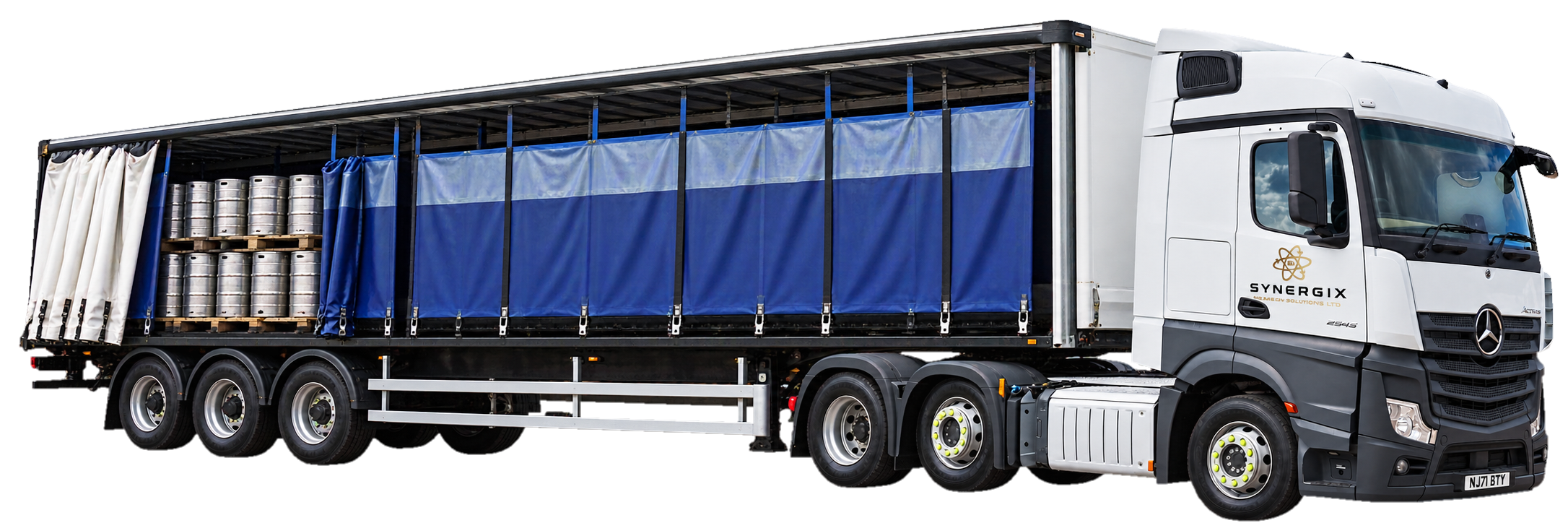
Purpose-built keg trailer
Keg layout and usable space confirmed
Actual trailer payload confirmed
For suitable keg distribution. Supply keg quantities, individual loaded weights, load presentation, site access and receiving arrangements.
Purpose-built keg trailers and other suitable vehicles are both used. Trailer layout, load restraint and unloading method are agreed for the job.
View vehicle guide: Purpose-built keg trailer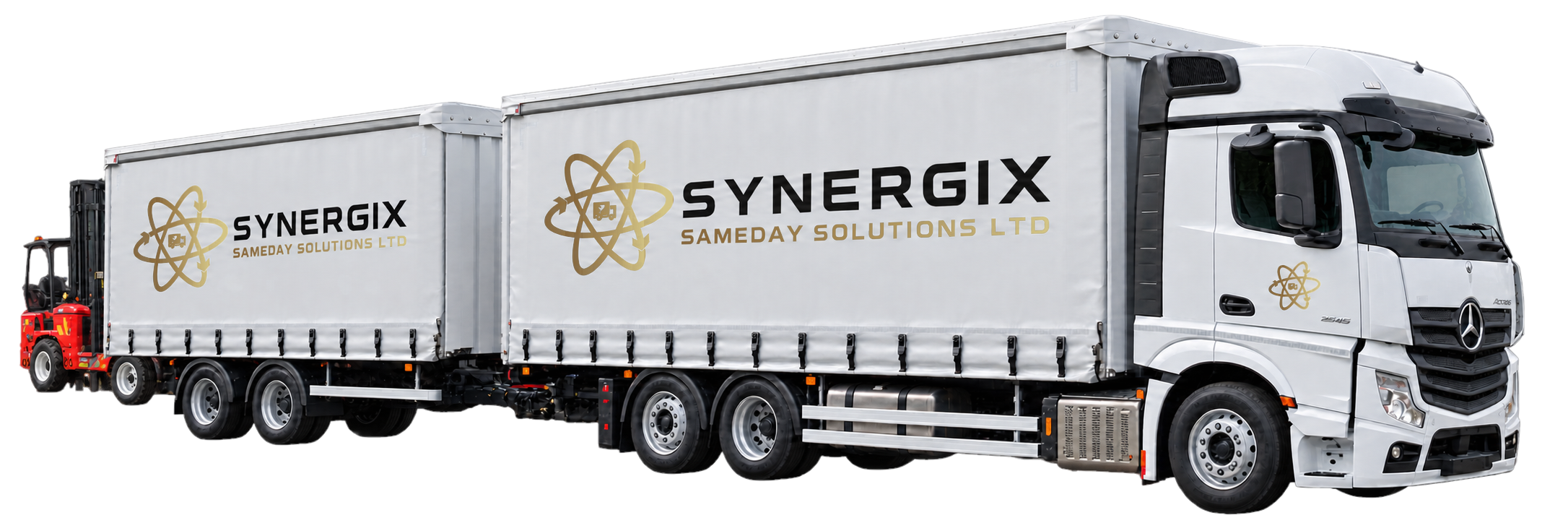
Wagon and drag MOFFETT
Both decks and forklift position confirmed
Actual completed combination payload confirmed
A rigid-and-drawbar combination with truck-mounted forklift unloading. Give individual load weights, deck allocation, unloading sequence and the ground route to the receiving point.
The carried forklift changes equipment position and freight allowance. Confirm the actual forklift, mounting, load-centre limits, ground and access.
View vehicle guide: Wagon and drag MOFFETTUse the slider or arrows, or open the stationary vehicle guide.
Stationary vehicle guide and dimensions
| Vehicle | Load space | Payload / equipment | Booking check |
|---|---|---|---|
| Small van | 1.2 × 1 × 1 m | Up to 400 kg | Standard body guide; actual vehicle checked. |
| Short wheelbase van | 2.4 × 1.2 × 1.2 m | Up to 800 kg | Standard body guide; actual vehicle checked. |
| Long wheelbase van | 3.6 × 1.2 × 1.8 m | Up to 1,250 kg | Standard body guide; actual vehicle checked. |
| Extra long wheelbase van | 4.2 × 1.2 × 1.8 m | Up to 1,100 kg | Standard body guide; actual vehicle checked. |
| Luton van | 4 × 2 × 2 m | Up to 1,100 kg | 900 kg with a tail lift; conversion checked. |
| 7.5 tonne lorry | 6 × 2.2–2.4 × 2–2.445 m | Up to 2,400 kg | Standard body guide; actual vehicle checked. |
| 18 tonne lorry | 7.5 × 2.4 × 2.5 m | Up to 9,000 kg | Standard body guide; actual vehicle checked. |
| 26 tonne lorry | 8 × 2.5 × 2.6 m | Up to 15,000 kg | Standard body guide; actual vehicle checked. |
| 13.6m articulated lorry | 13.6 × 2.5 × 2.6 m | Up to 26,000 kg | Standard body guide; actual vehicle checked. |
| Luton curtainsider | Actual body specification confirmed | Load-specific capacity | Actual body, equipment and working payload checked. |
| 7.5t curtainsider | Actual body specification confirmed | Load-specific capacity | Actual body, equipment and working payload checked. |
| 18t curtainsider | Actual body specification confirmed | Load-specific capacity | Actual body, equipment and working payload checked. |
| Articulated curtainsider | Actual body specification confirmed | Load-specific capacity | Actual body, equipment and working payload checked. |
| 18t flatbed HIAB | Actual body specification confirmed | Load-specific capacity | Actual body, equipment and working payload checked. |
| 26t flatbed HIAB | Actual body specification confirmed | Load-specific capacity | Actual body, equipment and working payload checked. |
| Wagon & drag, rear HIAB | Actual body specification confirmed | Load-specific capacity | Actual body, equipment and working payload checked. |
| Wagon & drag, front HIAB | Actual body specification confirmed | Load-specific capacity | Actual body, equipment and working payload checked. |
| Three-axle HIAB tractor | Actual body specification confirmed | Load-specific capacity | Actual body, equipment and working payload checked. |
| Four-axle heavy HIAB tractor | Actual body specification confirmed | Load-specific capacity | Actual body, equipment and working payload checked. |
| HIAB artic & flatbed | Actual body specification confirmed | Load-specific capacity | Actual body, equipment and working payload checked. |
| Heavy HIAB artic & flatbed | Actual body specification confirmed | Load-specific capacity | Actual body, equipment and working payload checked. |
| 26t flatbed MOFFETT | Actual body specification confirmed | Load-specific capacity | Actual body, equipment and working payload checked. |
| 26t curtainsider MOFFETT | Actual body specification confirmed | Load-specific capacity | Actual body, equipment and working payload checked. |
| Artic flatbed MOFFETT | Actual body specification confirmed | Load-specific capacity | Actual body, equipment and working payload checked. |
| Artic curtainsider MOFFETT | Actual body specification confirmed | Load-specific capacity | Actual body, equipment and working payload checked. |
| Articulated flatbed | Actual body specification confirmed | Load-specific capacity | Actual body, equipment and working payload checked. |
| Refrigerated trailer | Actual refrigerated space confirmed | Refrigerated trailer option | Actual body, equipment and working payload checked. |
| Double-deck box trailer | Actual body specification confirmed | Load-specific capacity | Actual body, equipment and working payload checked. |
| Double-deck curtainsider | Actual body specification confirmed | Load-specific capacity | Actual body, equipment and working payload checked. |
| Tanker trailer | Actual body specification confirmed | Load-specific capacity | Actual body, equipment and working payload checked. |
| Skeletal container trailer | Actual body specification confirmed | Load-specific capacity | Actual body, equipment and working payload checked. |
| Walking-floor trailer | Actual body specification confirmed | Load-specific capacity | Actual body, equipment and working payload checked. |
| Step-frame trailer | Actual body specification confirmed | Load-specific capacity | Actual body, equipment and working payload checked. |
| Bulk tipper trailer | Actual body specification confirmed | Load-specific capacity | Actual body, equipment and working payload checked. |
| Alloy U-shaped tipper | Actual body specification confirmed | Load-specific capacity | Actual body, equipment and working payload checked. |
| Low-loader | Actual body specification confirmed | Load-specific capacity | Actual body, equipment and working payload checked. |
| Megalift trailer | Actual body specification confirmed | Load-specific capacity | Actual body, equipment and working payload checked. |
| Purpose-built keg trailer | Keg layout and usable space confirmed | Actual trailer payload confirmed | Purpose-built keg trailers and other suitable vehicles are both used. Trailer layout, load restraint and unloading method are agreed for the job. |
| Wagon and drag MOFFETT | Both decks and forklift position confirmed | Actual completed combination payload confirmed | The carried forklift changes equipment position and freight allowance. Confirm the actual forklift, mounting, load-centre limits, ground and access. |
Plan the load and the unloading together
These are body-specific planning guides. Door openings, wheel arches, curtainsider bodies and carried equipment change usable space and payload. For a MOFFETT delivery, confirm load weight and centre of gravity, fork access, suitable ground and the placement area. A carried forklift is different from a HIAB crane or a tail lift.
Use LoadCheck for an initial space estimate, or send the packed dimensions, weights and store access details to our team. Where pallet-truck handling is needed for a loaded pallet of 800 kg or more, request an electric pump truck. Lighter pallets can also need powered handling where the surface, gradient or carrying distance makes manual movement unsuitable. Actual platform capacity, ground and the unloading route still need checking.
How the service works
Give every return flow a defined next step.
Connect the outward and return legs
A return journey with a defined purpose.
The collection requirement belongs in the delivery plan from the start.
- Declare the streams
List stock, containers and agreed materials by store and destination.
- Plan capacity
Allow for the changing load, handling time, weight and separation through the route.
- Collect and record
Use the agreed references, quantity checks and collection locations.
- Deliver the next step
Return containers, hand over stock or pass materials to the agreed processing route.
Practical environmental benefits
Fewer separate trips. Less packaging thrown away.
Consolidation, productive return journeys and material reuse are tangible ways to improve a retail delivery operation.
Empty running
Put the return journey to work
In our established retail loop, returning vehicles carry collected stock, reusable containers or declared materials. Combining that work with the delivery route reduces the need to send separate vehicles for each requirement.
Mileage and CO₂
Look at the whole delivery cycle
Joining deliveries and collections can reduce avoidable mileage, fuel use and associated CO₂ emissions. The useful comparison is the complete operation, including returns and collection trips, rather than only the outward stock movement.
Longer container use
Repeat the packaging cycle
Returning reusable delivery containers keeps them available for another dispatch. Their condition and suitability still matter, but repeated use reduces the need to replace delivery packaging after every trip.
Recycling records
Know where collected materials go
Clear garment plastic and cardboard in the established programme are processed through a recycling partner, with records held. Agree material streams and any reporting needed for your own programme, keeping general waste separate.
A practical starting point
Booking this service for the first time.
Use the information your warehouse, supplier and receiving team already hold. You can start a discussion before every detail is final, provided estimates and missing information are clear.
Map the return flows
Separate stock, containers and materials
List what comes back from each store: merchandise, reusable containers, cardboard, clear garment plastic or other proposed streams. Keep these distinct, with quantities and destinations. Not every waste or packaging material can be treated in the same way.
Use packed and loose volumes
Check the route at its fullest point
Your stores and warehouse can estimate the size and weight of each collection. Include bulky empties as well as saleable stock. The available space changes after every stop, so return capacity must be planned alongside the outward deliveries.
Identify the next destination
Agree what each return becomes
State which stock returns to a warehouse, which containers re-enter the delivery cycle and which materials go to an agreed partner. Ask your own team for the references and separation rules. Transport does not automatically include product grading, refunds or waste treatment.
Start with a complete cycle
Send the outward and return brief together
Provide a representative week covering dispatch, store delivery and collections. Mark estimates and any unconfirmed streams. Explain the outcome you need, such as recovering containers or reducing separate trips, so the programme can be assessed as a whole.
An accountable retail partner
A delivery loop that does useful work.
Returned stock, reusable containers and agreed material streams need a plan alongside the outward deliveries.
Relevant retail work
A service built around the actual operation
The established retail operation connects warehouse collection, store delivery and return movements. Familiar route drivers understand both sides of the store visit.
A practical service plan
Match the work to your requirement
Merchandise, reusable containers and agreed packaging streams stay distinct. Their quantities, handling and destinations are built into the route rather than treated as spare space.
Clear handovers
Keep quantities and responsibilities visible
Return references and agreed collection records help your team track what leaves each store and where it goes next. Partner recycling records support the established operation without implying every material is accepted.
Insured and visible
Follow the booked movement
Fully insured transport, live tracking, proof-of-delivery records and our customer portal support the booked movement. Declare goods and value so applicable cover can be confirmed. Portal access does not imply automatic stock alerts, item-level checks or an integration.
People behind the plan
Experience and operational support
Three generations of family transport experience support an owner-led business trusted with demanding retail work. Our operations team is available 24/7, with account management arranged around the contract.
An urgent alternative
Help when stock cannot wait
A separately booked dedicated courier movement can support urgent stock, parts or campaign material. UK-wide courier collections are available within 60 minutes for many bookings, subject to location, vehicle and confirmation. This response does not apply automatically to specialist trucks or port collection.
Make the return journey work
Deliver. Collect. Reuse.
Retail logistics can join the outward delivery and the return requirement in one planned operation.
Design the collection into the route
Use journeys for more than one purpose
A joined delivery and return plan can reduce empty running and separate collection trips. Define the actual goods and materials at each store so the vehicle can complete useful work in both directions.
Keep the material route clear
Reuse first where the container is suitable
Return reusable containers for another cycle and separate agreed recyclable packaging. Material acceptance, processing and records follow the arrangement agreed with the retailer and partner.
Plan the service and price
Tell us how your stores work.
Map what leaves each store as well as what arrives. Include quantities, condition and the intended next destination.
- Outbound patternStores, delivery days, vehicle sizes and normal receiving service.
- Return stockReferences, quantity, condition, packing and authorised destination.
- Reusable equipmentContainers, cages or pallets, ownership and dimensions.
- Material streamsClear plastic, cardboard, general waste or other declared materials kept distinct.
- Capacity and separationPeak volumes, weight, handling equipment and load compatibility.
- Collection pointWhere each return stream is prepared, access and permitted hours.
- Partner handoversProcessing destinations, receiving arrangements and required records.
- Commercial scopeFrequency, added handling, consolidation, reporting and additional trips.
A tariff that fits the operation
Backhaul is priced around the actual return work, including collection time, volume, weight, separation, destination and any handling or processing. Combining it with a delivery route can improve use of the journey, but does not make every return collection free. We agree the tariff and responsibilities for each stream.
For retail transport and purchasing teams
Assess the service behind the rate.
Use a clear operating brief to compare the service and agree responsibility, records and commercial arrangements before work starts.
Flow specification
Keep ownership and material streams clear
Define merchandise returns, reusable containers and agreed material collections separately. Identify quantities, destinations, separation requirements and the party authorising each flow. Avoid treating a transport collection as automatic grading, recycling or disposal.
Records and claims
Agree the evidence behind your programme
Set out return references, counted units and the records needed for the agreed collections. In our established operation, partner recycling records are retained. Discuss your reporting need and underlying data before making a measured carbon or recycling claim for your own programme.
Commercial comparison
Assess the complete outward-and-return cycle
Compare the delivery schedule, changing route capacity, collection handling and onward destinations together. Productive return legs can reduce separate trips, but the saving depends on the actual programme, not a universal zero-empty-mile promise.
Supplier approval
Include transport and material requirements
Send the programme, goods values and supplier approval requirements to sales. Identify proposed material streams and any required checks. Agree applicable cover, the actual activity and commercial terms, including purchase orders and invoicing, before collection begins.
Read our standard trading terms before booking. Send your programme and supplier approval requirements to sales@synergixsameday.com, or call 01782 911 181 to discuss regular work.
Answers before you book
Reverse logistics and backhaul questions.
Practical answers about the service, handling, information and commercial arrangements.
What is reverse logistics?
It is the movement and agreed handling of goods or materials coming back through the operation, including returned merchandise, reusable containers and suitable recycling streams.
What does backhaul mean?
Backhaul is the return movement of the vehicle with a useful load. A store delivery vehicle can collect declared returns or containers on its way back, subject to the planned capacity and handling.
Can deliveries and returns use the same route?
Yes. That is part of our established retail model. The return quantities, material streams and destinations are included when planning the route.
How can the return loop reduce empty mileage?
Returning vehicles can carry stock, reusable containers or agreed materials instead of travelling back empty. This can also remove the need for some separate collection journeys.
Can this reduce CO₂ emissions?
Combining compatible deliveries and collections can reduce avoidable trips and their associated fuel use and emissions. The extent depends on the complete operation, route and collection requirements.
Do you recycle the packaging you collect?
In our established retail operation, collected clear garment plastic and cardboard are recycled through a partner, with records retained. Material streams and acceptance are agreed for each customer's programme.
Does general waste go through the same recycling stream?
No. General waste is identified separately. The materials, preparation, destination and responsibilities must be agreed before collection.
Can reusable delivery boxes come back for another use?
Yes. Reusable bag-boxes and other agreed containers can circulate with the retail route, provided they remain suitable and their quantities are included in the plan.
Can you collect cages and empty pallets?
Yes, as agreed. Give ownership, quantity, dimensions and handling details so space, restraint and the receiving destination can be planned.
Can stock be moved to another store instead of the warehouse?
Yes. Internal transfers within the network can be arranged in 24–72 hours depending on service and budget, with the stock and receiving instructions supplied.
Does reverse logistics include refunds and product testing?
Those are separate responsibilities. We provide the agreed physical collection, transport and handling. Refund decisions, testing, grading or repair are not automatic parts of every booking.
Is backhaul included free with delivery?
The return work is scoped and priced for the actual programme. Volume, time, handling, material processing and destination can affect the commercial arrangement.
Built around your retail operation
Make your retail delivery loop work harder.
Tell us what comes back from each store and where it needs to go. We will help join stock delivery, returns, reusable containers and agreed material collections into one practical operation.
Prefer email? sales@synergixsameday.com