
Office moves, refreshes and phased deliveries
Office & workplace
projects
A workplace project needs more than a vehicle at the door. Synergix coordinates furniture and equipment movements, internal carrying and agreed setup around the rooms, people and timetable involved. Tell us the outcome you need, from one office refresh to a programme of workplace deliveries.
Teams prepared for the taskPeople and skills matched to the agreed work.
Fully insured transportGoods, value and applicable cover confirmed.
Live tracking & PODFollow transport and confirm the delivery.
24/7/365 supportAppointments and on-site work arranged separately.
What we provide
Office & workplace projects
Build the brief around what needs to happen in each space. We agree the transport and on-site tasks, then plan the people, equipment and sequence needed to complete that work.
New furniture
Deliver into the workplace
Arrange collection from suppliers or depots and delivery to the agreed receiving points. Furniture, appliances, fragile equipment and other bulky items can form part of the same project brief, with appropriate handling confirmed for each.
Existing assets
Move within or between buildings
Tell us which items change rooms, floors or premises and which remain in place. An inventory and clear destination labels help separate outgoing furniture from goods being reused and stop an internal move becoming a guessing exercise.
Phased programmes
Follow your project sequence
Plan departments, floors or addresses in an agreed order. Share the opening date, occupied areas, lift bookings and dependencies on other contractors so delivery and carrying time are considered alongside the wider programme.
Agreed finish
Add assembly and setup
Request the unpacking, assembly, positioning or product work needed. Synergix can train or appoint suitably skilled people for accepted tasks. IT connections, structural work and regulated trades require a precise scope and explicit agreement.
Vans and trucks up to 13.6m
Transport matched to the load.
Choose the vehicle around the goods, access and loading plan. On-site handling and the skills needed for the work are confirmed separately.
Showing 9 vehicle options.

Small van
1.2 × 1 × 1 m
Load length × width × height
Up to 400 kg
Typical standard body. Assigned vehicle confirmed.

SWB van
2.4 × 1.2 × 1.2 m
Load length × width × height
Up to 800 kg
Typical standard body. Assigned vehicle confirmed.

LWB van
3.6 × 1.2 × 1.8 m
Load length × width × height
Up to 1,250 kg
Typical standard body. Assigned vehicle confirmed.

XLWB van
4.2 × 1.2 × 1.8 m
Load length × width × height
Up to 1,100 kg
Typical standard body. Assigned vehicle confirmed.
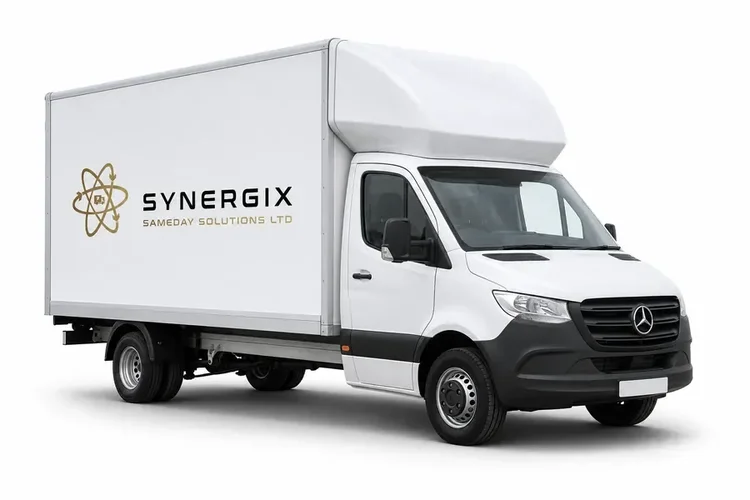
Luton van
4 × 2 × 2 m
Load length × width × height
Up to 1,100 kg
Up to 900 kg with a tail lift.
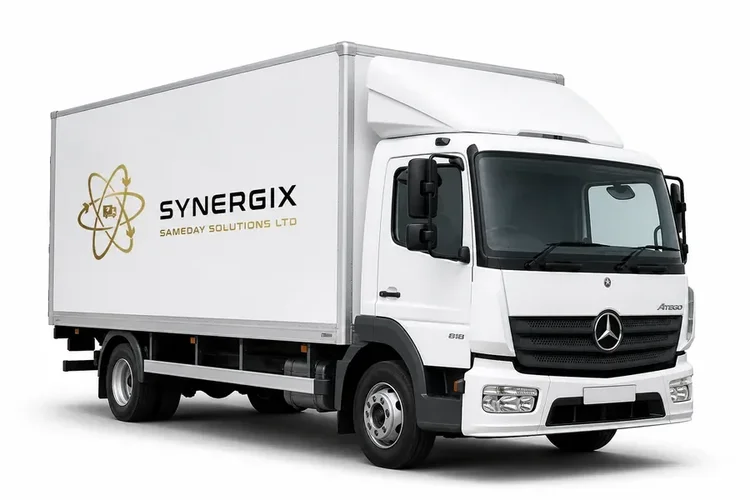
7.5 tonne lorry
6 × 2.2–2.4 × 2–2.445 m
Load length × width × height
Up to 2,400 kg
Typical standard body. Assigned vehicle confirmed.

18 tonne lorry
7.5 × 2.4 × 2.5 m
Load length × width × height
Up to 9,000 kg
Typical standard body. Assigned vehicle confirmed.

26 tonne lorry
8 × 2.5 × 2.6 m
Load length × width × height
Up to 15,000 kg
Typical standard body. Assigned vehicle confirmed.

13.6m artic
13.6 × 2.5 × 2.6 m
Load length × width × height
Up to 26,000 kg
Typical standard body. Assigned vehicle confirmed.
View stationary dimensions and vehicle guide links
These are typical standard-body planning figures. Actual load space, doors, loading equipment and usable payload must be checked for the assigned vehicle.
| Vehicle | Load space | Payload | Checks |
|---|---|---|---|
| Small van | 1.2 × 1 × 1 m | Up to 400 kg | Compact loads. Check item size and handling at each end. |
| SWB van | 2.4 × 1.2 × 1.2 m | Up to 800 kg | Smaller goods. Check door openings and wheel arches. |
| LWB van | 3.6 × 1.2 × 1.8 m | Up to 1,250 kg | Longer enclosed loads. Check openings and restraint. |
| XLWB van | 4.2 × 1.2 × 1.8 m | Up to 1,100 kg | Extra length for bulky goods. Length does not increase lifting capacity. |
| Luton van | 4 × 2 × 2 m | Up to 1,100 kg | Bulky items. Up to 900 kg with a tail lift; confirm platform capacity. |
| 7.5 tonne lorry | 6 × 2.2–2.4 × 2–2.445 m | Up to 2,400 kg | Body-dependent dimensions. Confirm unloading equipment and access. |
| 18 tonne lorry | 7.5 × 2.4 × 2.5 m | Up to 9,000 kg | Larger loads. Confirm turning space and unloading. |
| 26 tonne lorry | 8 × 2.5 × 2.6 m | Up to 15,000 kg | Larger rigid capacity. Equipment reduces usable payload. |
| 13.6m artic | 13.6 × 2.5 × 2.6 m | Up to 26,000 kg | Bulk loads and projects. Confirm trailer, loading and access. |
The handling plan still matters.
Vehicle capacity does not establish what a person or team can lift. Tail-lift capacity, the whole platform load, ground conditions and the carrying route need checking. Body conversions and equipment can reduce useful space and payload.
Practical product and project detail
Workplace projects we can help deliver.
Office furniture is one part of a workplace. Explain the assets, locations and work involved so we can assess the complete movement rather than pricing from a job title alone.
- Office refreshes
- New workplaces
- Team changes
- Shared spaces
- Several addresses
Furniture replacement and layout changes
Replacing desks, seating or storage can involve deliveries, internal moves and taking selected old items back to a depot. Identify what stays, what changes location and what leaves, with a clear plan for each room.
Move-in delivery and positioning
Arrange furniture and equipment arrival around site readiness. Give the handover dates, floor plans and access information so the load sequence follows the rooms that can actually receive goods.
Department and floor moves
Set out the items moving between departments, the floors involved and the order in which space becomes available. Label assets by destination and identify any equipment that your own technical team needs to disconnect or reconnect.
Reception, meeting and breakout areas
Large tables, reception counters, sofas and appliances need individual handling plans. Tell us about fragile finishes, working public areas and any time when the shared space must remain usable.
Workplace delivery programmes
Combine a schedule of office deliveries or refreshes into an agreed operation. Give site contacts, quantities, local rules and completion requirements for each address. A common product list does not mean every building has the same access.
Keep ownership of the details
Plan the project by room, phase and responsibility.
The transport crew needs to know where its part of the project begins and ends. A written scope helps your facilities team, supplier and site contact work to the same plan.
Asset list
Know what is moving
Give descriptions, counts, dimensions, weights and condition information. Separate new goods, assets being reused, returns and items staying on site. For fragile or valuable equipment, include handling instructions and declared values.
Dependencies
Match the working sequence
Confirm when rooms, loading areas and lifts are available. If a fit-out, flooring job or another move must finish first, flag that dependency. We can plan phases around agreed dates, with changes discussed as soon as they are known.
Responsibilities
Make the interfaces clear
Agree who packs small items, labels assets, disconnects equipment and approves the layout. Name the person who can authorise extra work or a changed room allocation. A delivery crew should not be left to decide the office design.
Handover
Record the completed phase
Set the checks for each phase: goods delivered, rooms served, requested assembly completed and exceptions noted. Agree any photographs or asset lists in advance, so completion evidence answers your project questions.
Transport and workplace work can be coordinated.
We can support an agreed project scope without assuming responsibility for the whole building fit-out. Design, construction, networking and trade work need their own clear arrangements.
The building is part of the brief
From the loading bay to the final workspace.
Explain both ends of the journey. A straightforward collection can still lead to a difficult delivery if the lift, parking or carrying route has not been checked.
Vehicle arrival
Allow room and time to unload
Provide the correct entrance, loading restrictions, bay booking, permit arrangements and vehicle height limits. State whether goods must cross a public or occupied area and who manages access.
Internal handling
Measure the route that matters
Check doorways, corners, stairs, lift openings and the distance to each room. Heavy goods, awkward shapes and fragile surfaces may need different equipment or a larger team, rather than an assumed two-person manual carry.
Business continuity
Agree when the work happens
Tell us about working hours, quiet periods, security, staff presence and shared-space restrictions. Evening, weekend or staged visits can be discussed, with appointments confirmed around crew and building availability.
Returns and outgoing goods
Give every item a destination
Pre-arrange furniture returns, exchanges, packaging movements and depot collections. An outgoing load requires its own item list, condition and destination; removal does not automatically mean disposal or recycling.
Why choose Synergix?
The people and capability behind the work.
A practical plan, suitably prepared people and an accountable team to follow the work through.
Customer-specific skills
People prepared for your products
We train or appoint suitably skilled drivers and mates for the work we accept. Share your workplace project instructions before booking so the team arrives prepared for the agreed tasks, rather than discovering a specialist requirement on site.
Established furniture work
Trusted with major retail deliveries
Synergix works with major UK furniture retailers. That experience matters when there are several parties involved: the supplier, recipient, site manager and delivery crew need the same practical instructions and a clear handover.
Transport protection
Fully insured transport
Tell us the goods and their value so applicable cover can be confirmed. Carrying, assembly and work on the premises need their own scope and cover checks; the transport description alone does not establish every on-site task.
Visibility
Live tracking and proof of delivery
See the transport progress and receive proof of delivery. Agree any additional room lists, condition photographs or completion checklist before the visit so a signed delivery is distinguished from acceptance of the whole project.
People behind the work
Three generations of transport experience
Our family transport background supports a practical approach to the whole job: the vehicle, loading sequence, people, access and customer promise. You can speak to a responsible team when a plan needs changing.
Operational support
Available 24/7/365
Our operations team supports urgent questions, planned deliveries and changes outside normal office hours. A staffed telephone is separate from crew availability: installation dates, overnight work and weekend appointments are confirmed for your booking.
How the job works
From the brief to the handover.
Agree the work before the appointment so the goods, people, time and site arrangements fit together.
- Share the project
Send the asset list, addresses, plans and timetable. Identify uncertain areas so we can resolve them before the move.
- Agree the responsibilities
Confirm packing, labels, site access, specialist tasks, the installation finish and who can authorise changes.
- Carry out the phases
The team follows the agreed sequence and raises missing information or access problems with your nominated contact.
- Close each handover
Review the phase, record exceptions and confirm returns or follow-up work against the project brief.
Price and preparation
What we need to quote.
We price against the project scope, asset schedule, transport, people, access and time on site. A simple furniture drop, an occupied-floor reshuffle and a phased multi-building programme need different resources. Send the full brief so the quotation reflects the work rather than an incomplete item count.
- Project outcomeDescribe the workplace change, addresses, departments and what you want completed. Distinguish furniture moves, deliveries, assembly and technical tasks.
- Assets and product informationGive quantities, dimensions, weights, values and instructions. Identify new goods, existing assets, returns and anything that needs special protection.
- Room and phase planShare room references, layouts, asset labels, delivery priorities and the sequence in which areas become available.
- Access and building rulesInclude loading bays, vehicle limits, security registration, lift booking and capacity, stairs, parking and carrying distances.
- Programme and contactsGive preferred dates, deadlines, site readiness dependencies and authorised contacts for each building or phase.
- Finish and outgoing itemsAgree completion checks, records, packaging movements and the destination of furniture or equipment leaving the site.
Answers before you book
Office & workplace projects questions.
Service scope, preparation and the details that affect the booking.
What can an office and workplace project include?
We can arrange furniture and equipment deliveries, internal moves, transport between premises and agreed assembly or positioning. Tell us the full requirement. The accepted scope determines the team, equipment and responsibilities.
Is this a full office relocation service?
Ask us to assess your relocation brief. Moving office furniture and equipment can be included, but packing, archive handling, IT disconnection, specialist equipment and other work must be specified and agreed. We do not assume every office move includes every task.
Can you move furniture within the same building?
Yes, by arrangement. Provide the items, start and finish locations, floors and access route. Include any dismantling or reassembly needed so the crew and time allowance match the actual internal move.
Can you coordinate several deliveries or project phases?
Yes. Share the quantities, dates, addresses, dependencies and site contacts. We agree a workable programme, with each phase based on the goods and access involved.
Will you follow our room plans and asset labels?
We can work to agreed room allocations and asset labels. Give the team current information and keep a responsible contact available for decisions. Layout changes and unidentified items need resolution rather than guesswork.
Can the work take place while staff remain in the office?
Tell us which areas are occupied, when routes are available and any restrictions. We plan around the agreed conditions, including how staff and delivery activity use the same spaces. Some tasks may need a separate time or cleared area.
Can you provide weekend or overnight workplace deliveries?
Ask for the dates and hours required. We can consider out-of-hours arrangements subject to people, vehicles and site access. The operations telephone is staffed 24/7, while the actual project slot is separately confirmed.
Do you disconnect IT, electrical equipment or appliances?
Only where the exact task and suitable competence have been explicitly agreed. Identify connections, testing and commissioning in the brief. Furniture or equipment transport alone does not include those services.
Can you collect old furniture and packaging?
Yes, if pre-arranged with specified items, quantities and destination. Returns to a depot, reusable furniture movements and packaging collections can be planned. Disposal and recycling require their own confirmed arrangements.
What happens if a floor or room is not ready?
Tell us as early as possible. We discuss how the sequence can change and whether waiting, storage, another visit or a revised price is required. The crew needs an authorised contact rather than an instruction to improvise.
Can you support projects across mainland UK?
Yes. Share every address and the required timetable. Island work is considered individually around crossings, access and the programme, rather than included automatically in a mainland quotation.
Can you collect urgently within 60 minutes?
Suitable urgent courier collections may be arranged within 60 minutes, subject to goods, postcode, vehicle and availability. That is separate from a staffed workplace move or installation appointment, which requires its own resource and access confirmation.
Talk through the requirement
Tell us what your workplace needs to change.
Give us the assets, addresses, access and programme. We will help turn them into a practical delivery and on-site plan.